Pardon the Disruption is a column that looks at the forces shaping food retail.
Two of the fastest-growing grocers in the U.S. have stumbled recently, raising questions about their ambitions to tear across the country and disrupt established players.
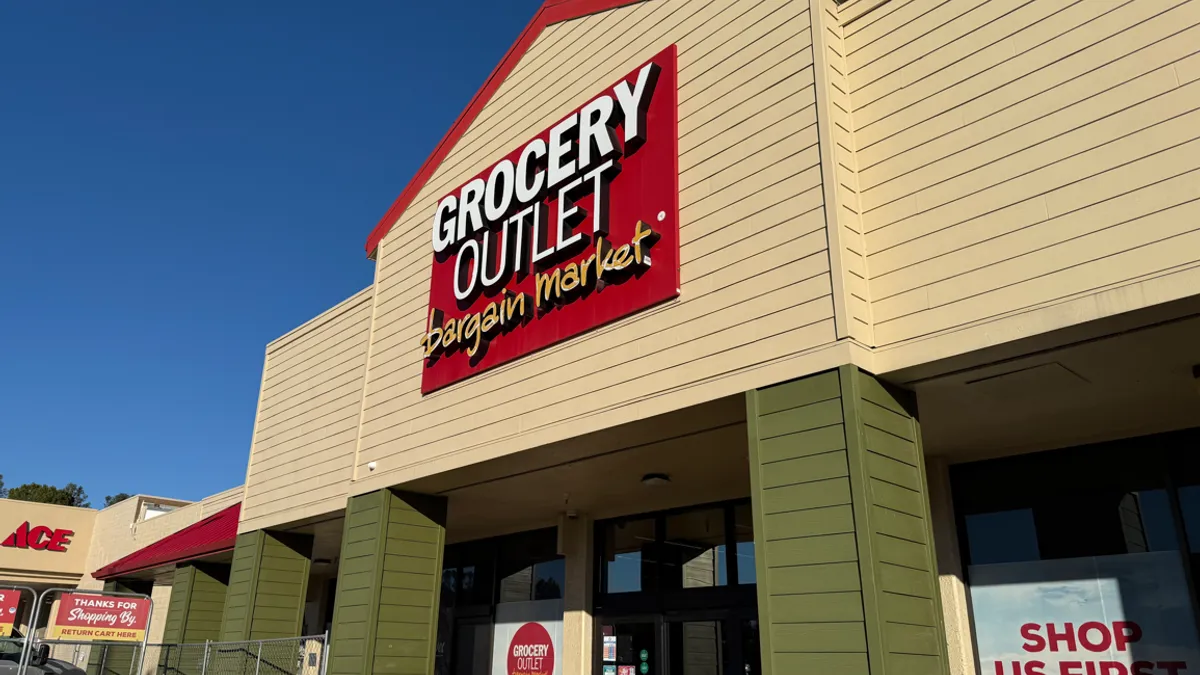
Grocery Outlet, which over the past several years has opened a few dozen stores annually, announced earlier this month it’s closing three dozen stores, most of which are newer locations on the East Coast. Jason Potter, who helped whip The Fresh Market into shape and is clearly trying to instill a similar sense of discipline as he helms Grocery Outlet, told investors that the discount grocer has gotten ahead of itself in recent years and needs to refocus on the fundamentals, like offering a fuller assortment of goods and a clearer value message.
“It’s clear now that we expanded too quickly, and these closures are a direct correction,” he said during the company’s earnings call in March.
Grocery Outlet’s model has long focused on a “treasure hunt” shopping experience. Which is a great point of distinction, except a lot of consumers don’t want to hunt for the produce, cereal and other staples they need week in and week out. Potter has smartly determined the company needs to offer a more reliable shopping experience, but getting its operations aligned has been no easy task. Its push to round out the assortment pinched the company’s supply chain this most recent quarter.
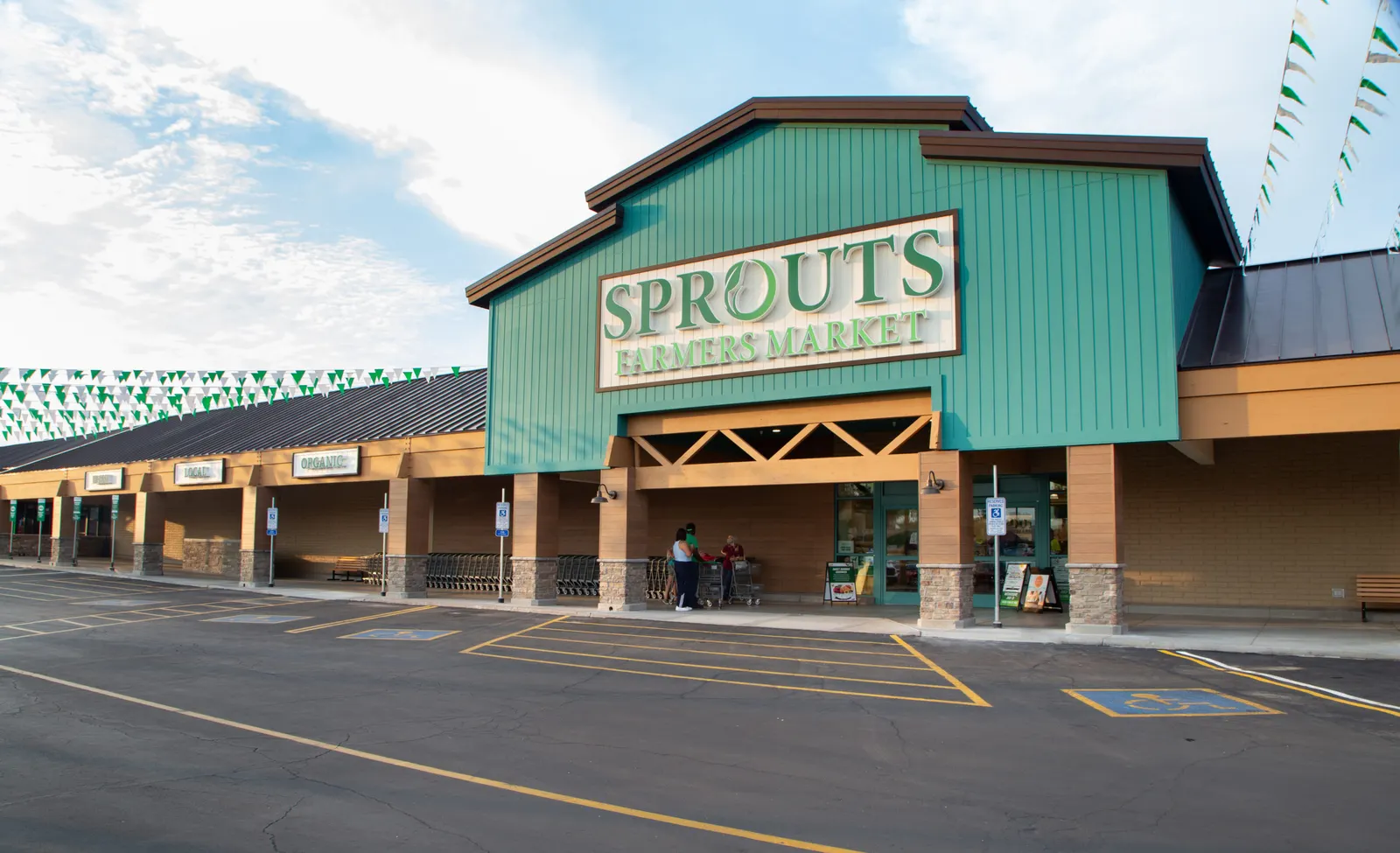
Sprouts Farmers Market is another high flyer that’s hit some speed bumps recently. After a stellar run coming out of the COVID-19 pandemic, the company has struggled as price-conscious shoppers visit the chain less frequently and purchase fewer goods. Its comps growth has decelerated over the past few quarters as a result. And yet, the company still plans to open at least 40 stores this year, in line with its growth trajectory over the past few years.
Sprouts has tried to position itself less as a value-focused specialty shop and more as a health-oriented retailer. But it seems to be caught between its former identity and its new one. It’s not value-focused enough to appeal to price-sensitive consumers and not premium enough to command significant spending from higher-income ones.
Grocery Outlet and Sprouts sit at the forefront of an increasingly fragmented grocery market, and their selling models are smartly designed to capitalize on consumers’ willingness to visit multiple outlets in order to score deals and find all the products they need and love.
Their struggles, however, underscore the fact that while consumers are more than willing to shop around, their preferences and perception of what constitutes a good value are rapidly evolving.
Building the plane — or rocket ship — while flying it
Looking ahead, both companies will continue to grow at the same pace they have in recent years, though with a focus on markets where they already operate stores. In addition, Grocery Outlet is running some stores until they reach profitability before handing off to its rigorously vetted — but also very new-to-the-system — independent operators.
These seem like sharp, rational decisions to improve positioning. But the whole situation brings to mind the old adage about trying to build a plane while flying it. The smarter move would be to pull back on growth during this volatile period and focus on getting the store strategy right — then again, investors demand rapid growth at all costs from these publicly listed grocers.
While Grocery Outlet and Sprouts offer a cautionary tale about rapid growth amid seismic industry shifts, Aldi is telling the industry, “forget the plane — we’re building a rocket ship!” The discounter has a reputation as an unstoppable industry force thanks to its leading store growth and extensive remodeling campaign. The company is opening close to 200 stores this year, and in recent years, it’s been the only grocery chain to hit triple digits in annual unit growth.
However, there are a few signs indicating its growing clout may be more marketing than reality. A market share analysis I did using Numerator data a few months ago, spanning 2020-2025, showed only a modest gain by Aldi despite opening hundreds of new stores during that five-year period. I also wonder how Aldi will perform once the economy eventually improves and consumers have more money in their pockets. Although Aldi has done a great job developing unique products akin to what Trader Joe’s sells, its stores are still pretty bare bones and lightly staffed. People may start to drift away to competing grocers that offer higher service levels, especially in more affluent markets where shoppers can afford to switch.
All of the grocers I’ve brought up in this column have distinct expansion strategies, yet they all seem to have a common enemy: conventional grocers.
These one-stop giants have numerous shortcomings when it comes to price, convenience and quality that both specialty and discount grocers are eager to exploit. But some of these traditional players are showing considerable strength and are even rivaling the upstarts when it comes to growth. Witness the northward march of Publix, which opened more than 50 stores last year and recently wiped its feet on the doorstep of Kroger’s hometown, Cincinnati. Harps Food Stores has nearly doubled in size over the past several years by scooping up independent grocers in small towns.
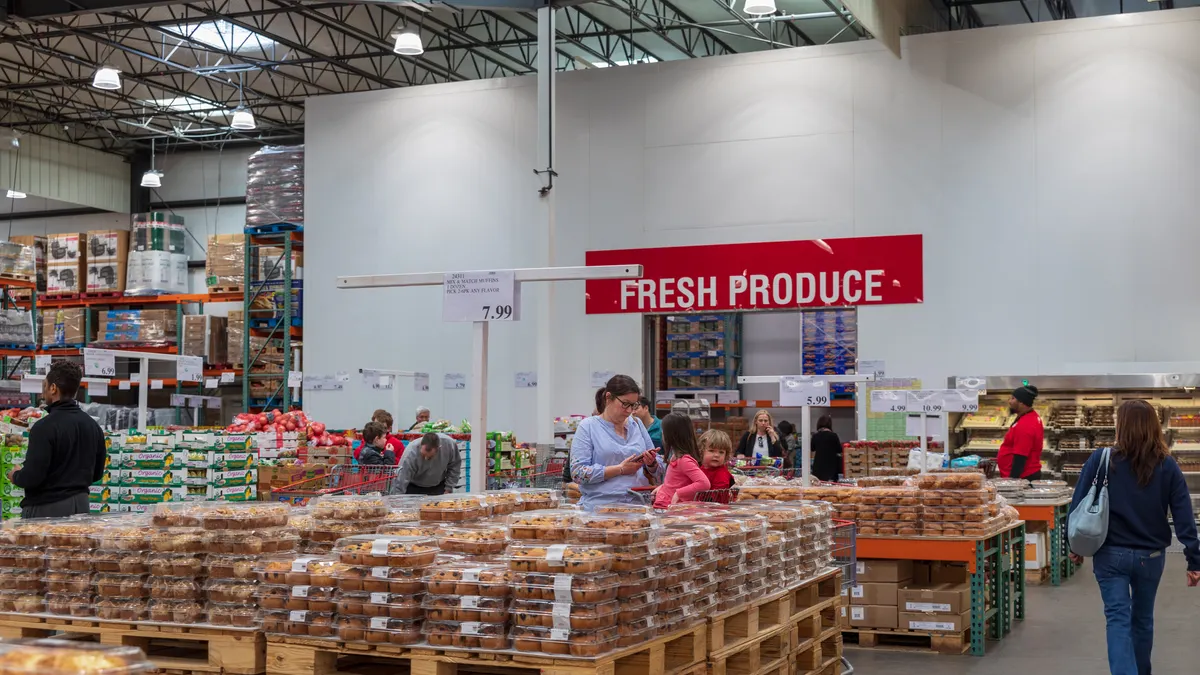
Club retailers, meanwhile, have entered the chat of rapidly growing grocery competitors, further complicating the rise of specialty and discount players. Walmart-owned Sam’s Club plans to open 15 clubs each year over the next decade, while BJ’s Wholesale Club opened 14 clubs last fiscal year — its highest single-year total — and said recently it’s on track to open between 25 and 30 over 2025 and 2026.
The narrative on growth and expansion in the grocery industry is an ever-changing one. In an economy this volatile, and with a rapidly evolving consumer base, today’s fast-expanding success story could be struggling by next year. In light of all this, retailers need to consider not just their need to expand, but whether they’ve earned the right to do so with customers.